ServicesReverse Osmosis System
Reverse Osmosis System in Gold Canyon
If you are tired of hauling bottled water home or your coffee tastes off, an under-sink reverse osmosis system gives you a dedicated tap of clean drinking water. We explain how it works, fit it neatly under your sink and show you the simple upkeep.
What Reverse Osmosis Does, in Plain Terms
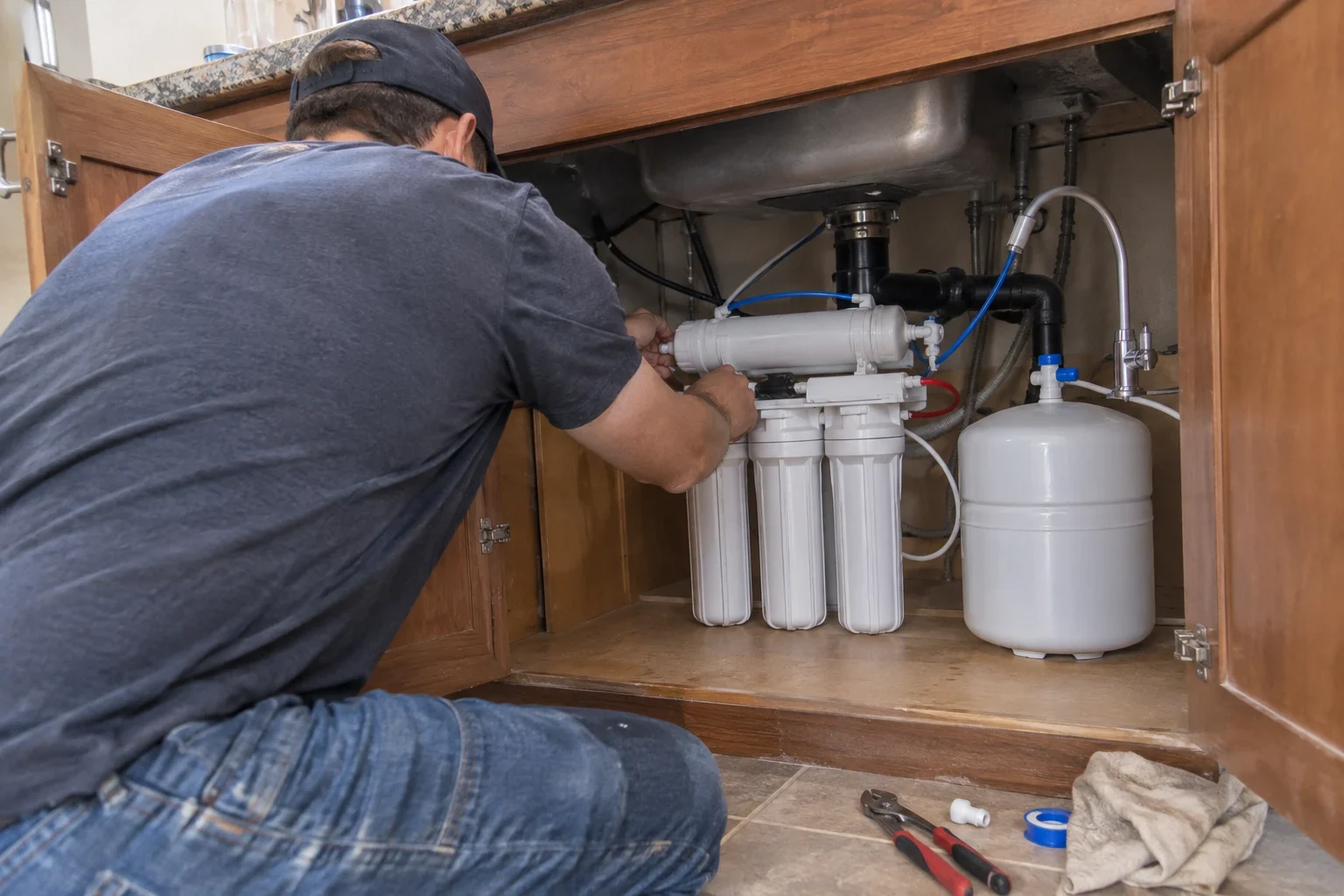
Reverse osmosis pushes your tap water through a very fine membrane. Water passes through; most dissolved minerals, salts and many trace contaminants do not. What is left behind gets rinsed down the drain, and the clean water is stored in a small tank under your sink until you open the separate faucet on your counter.
It is a point-of-use system, meaning it treats the water you drink and cook with, not every shower and washing machine in your home. That is usually the right call when your main complaint is taste, cloudy ice or the cost of bottled water. If you are seeing scale on fixtures all over the house, a softener or whole-home filtration handles that job, and RO can sit on top of either one.
We would rather you pick the right setup than the biggest one, so we walk through what each part does before anything goes under your sink.
What Your Installation Includes
Prefilters that protect the membrane
A sediment filter catches grit and rust flakes, and a carbon filter takes out chlorine taste and odor. Both also keep the membrane from clogging or wearing out early.
The RO membrane and storage tank
The membrane does the heavy lifting. A compact pressurized tank holds treated water so you get a steady flow when you fill a pot or a pitcher.
A dedicated drinking water faucet
We mount a separate faucet at your sink, using an existing sprayer or soap hole where we can. If a new hole is needed, we talk with you first about the counter material and placement.
Proper drain and supply connections
We tap a cold water line with its own shutoff valve and connect the drain line so waste water leaves cleanly without backing up. Everything is secured so it does not rattle or get knocked loose by the trash can.
Optional ice maker or fridge line
Your refrigerator can share the same treated water. Ask and we will add tubing from the RO unit to the fridge, which gives you clear ice cubes with no off taste.
A quick tour of your new system
Before we pack up, we point out the valve that turns the unit off, label which cartridge does what and give you a rough schedule for replacements. That way upkeep is never a guessing game.
Signs an RO System Makes Sense for You
- You buy cases of bottled water
- If water jugs are a regular part of the grocery run, a tap at your sink usually pays you back in convenience alone. No more lifting, storing or recycling.
- Spots on glasses and cloudy ice
- Minerals that are common in water across the area leave white film on dishes and cloudy cubes in the freezer. RO water dries clear.
- Coffee and tea taste flat or bitter
- Dissolved minerals and chlorine both change flavor. Many people notice the difference in their first cup.
- Your kettle keeps building scale
- A crusty kettle or coffee maker means those minerals are in every glass too.
- Your old RO system is slowing down
- If the faucet trickles, the tank runs dry fast or the water tastes off again, the membrane or filters may be worn. We can tell you honestly whether new filters will do or the unit needs replacing.
How Installation Day Goes
- 1
A conversation by phone first
You tell us what bothers you about your water and what is under your sink now, like a disposal or an older filter. We explain the options in plain language and what each one means for space and upkeep.
- 2
We protect the area and check the plumbing
We clear and cover the cabinet floor and look over the shutoff valves and drain. If a valve is seized or leaking, we point it out before we connect anything to it.
- 3
Mounting and connecting
The filter housing and tank go in where they leave you the most usable cabinet space. We connect the supply, the drain and the new faucet, then check every fitting for drips.
- 4
Flushing and first fill
A new system needs to fill and flush a tank or two before the water is ready, which clears out carbon dust from the new filters. We start that process and tell you when your first glass is ready to drink.
- 5
Cleanup and a quick lesson
We put your cabinet back the way you had it, take our packaging with us and show you how to change filters when the time comes.
What Moves the Price of Reverse Osmosis
No two sink cabinets are set up alike, so we give you a price after we hear what you want and what is already under there. You will know what that price includes before we start any work. These are the details that move it most.
- Type of system
- A standard tank system, a tankless unit with stronger flow, and a model with a final mineral cartridge that returns some calcium and magnesium for a rounder taste each land at different points.
- Your countertop
- Using an existing hole is simplest. Drilling through granite or quartz takes more care and the right bit than laminate does.
- Extra lines
- Running a line to a refrigerator or a second sink adds tubing, fittings and time, especially when the run is long or goes through a wall.
- Space and plumbing condition
- A tight cabinet with a disposal, or old shutoff valves that should be replaced, can add parts and labor.
Reverse Osmosis Questions We Hear Often
- Does a reverse osmosis system waste a lot of water?
- Some water is always sent down the drain to rinse the membrane, and that is how the system stays clean. Newer designs waste much less than older units did. Because it only treats drinking and cooking water, the overall amount is small compared with your laundry or irrigation.
- Is it okay that RO takes out the minerals?
- For most people, yes. Food supplies most of the minerals your body uses, not the water you drink. If you like a slightly fuller taste, we can add a mineral cartridge at the end that puts a touch of calcium and magnesium back.
- Do I still need a water softener if I get RO?
- They do different jobs. RO treats the water at one tap, while a softener protects your water heater, fixtures and appliances throughout your home. Many people have both, and softened water going into the RO unit helps the membrane last longer. Our water softener installation page explains that side in more detail.
- How long do the filters and membrane last?
- Plan on swapping the sediment and carbon prefilters somewhere between 6 and 12 months. The membrane holds up much longer, often several years, depending on how hard your water is and how much you draw from the tap each day. We show you the signs to watch for, like a slower stream or a shift in taste, so you replace parts when they actually need it.
- Will it fit under my sink with a garbage disposal?
- Usually it does. We place the tank and filters to the side and leave room around the disposal. If space is truly tight, we will tell you that by phone and talk through a slimmer or tankless option.
Ready for Better Water at Your Kitchen Tap
Tell us what you are dealing with and what is under your sink, and we will explain which reverse osmosis setup fits your home and why. No pressure, just straight answers.