ServicesWhole-Home Filtration
Whole-Home Filtration in Gold Canyon
This filter sits on your main water line, ahead of every faucet, shower and appliance, so the water reaching them carries less chlorine taste and smell. Before anything goes in, we explain what the filter handles, what it leaves alone and which setup suits your home.
What a whole-home filter actually does
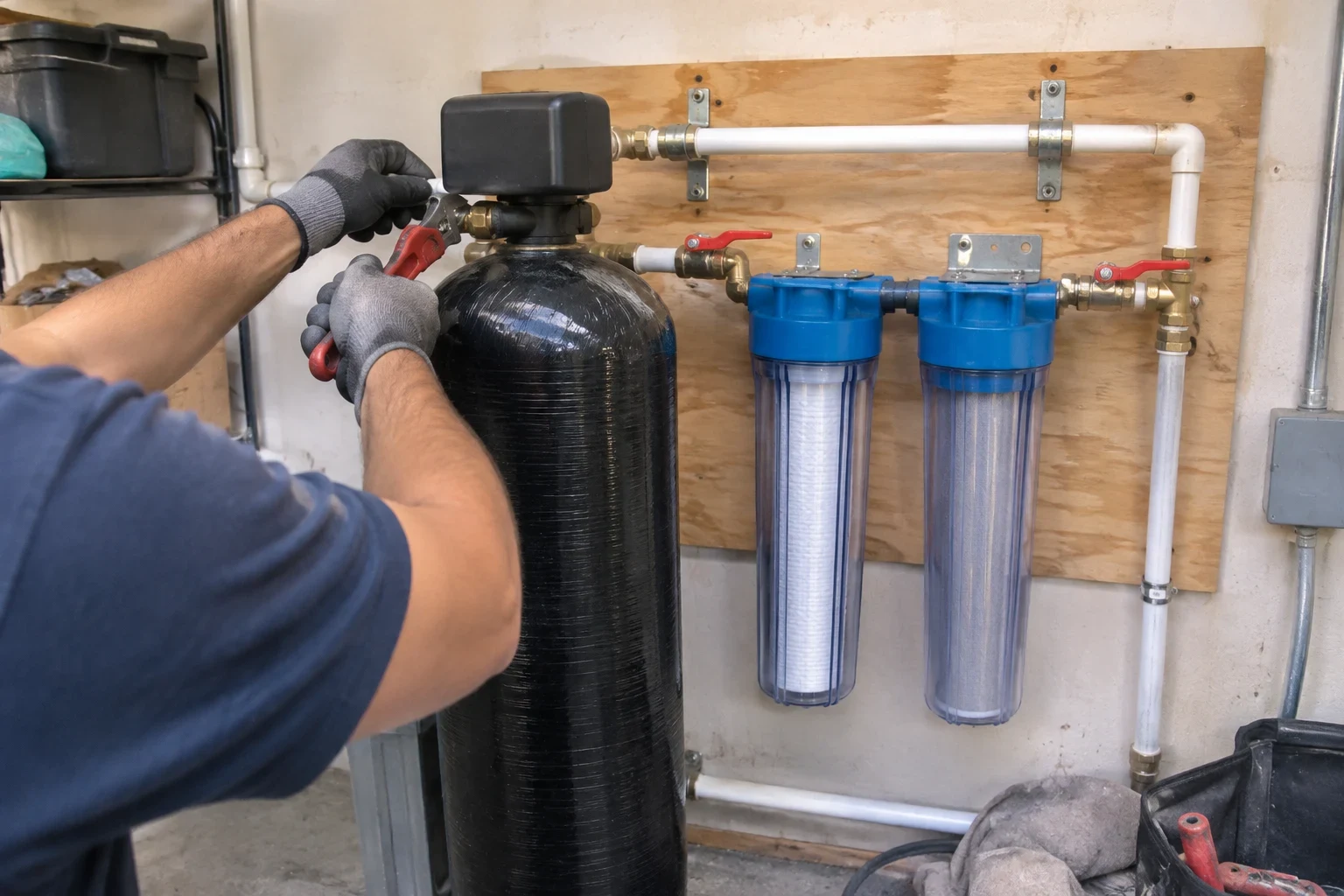
A whole-home filter, sometimes called a point-of-entry system, is a tank of filter media plumbed into your main water line. Every gallon that comes into your home passes through it first. Most systems use activated carbon, which grabs chlorine and many of the compounds behind off tastes and smells. A sediment stage in front catches sand, grit and pipe scale before it reaches your fixtures.
Here is the part people often hear wrong: a carbon filter does not soften water. It won't stop the white crust on faucets or the spots on shower glass, because those come from calcium and magnesium. That job belongs to a softener. Hard water is common across the East Valley, so many homeowners around Gold Canyon pair the two, with the filter handling taste and odor and the softener handling scale. If hardness is your main complaint, our water softener installation page is the better place to start.
What's included with your filtration system
A system sized to your home
We size the tank by your bathrooms, household size and peak flow. An undersized filter drops pressure when two showers run at once.
The right media for your water
Standard carbon handles chlorine well. If your utility disinfects with chloramine, catalytic carbon does a much better job, and we'll explain the difference in plain terms.
Sediment prefilter
A sediment stage protects the carbon bed and your fixtures from grit, so the main media lasts longer.
Bypass valve and clean tie-in
We install a bypass so you can isolate the filter for service without shutting off water to the house. If your home has a softener loop, we use it where it makes sense.
Startup flush and a maintenance walkthrough
New carbon releases fine dust, so we flush the system until the water runs clear. Before we leave, we show you the bypass and tell you when the media and prefilter will need changing.
Signs a whole-home filter is worth a look
- Chlorine smell in the shower
- Hot water releases chlorine into the steam, so a closed bathroom during a shower is often where you notice it most. A pitcher or sink filter can't help with that.
- The same off taste everywhere
- If the bathroom faucet tastes just like the kitchen tap, the issue is in the water coming into the house. Treating the main line covers every tap at once.
- Specks in aerators and showerheads
- Grit collecting in faucet screens or appliance inlets is exactly what a sediment prefilter is meant to catch.
- Chlorine still there after adding a softener
- A softener swaps out hardness minerals and does nothing about chlorine. Adding carbon ahead of it is a common, sensible fix.
- Skin feels tight after showering
- Some people say their showers feel gentler once chlorine is filtered out. It isn't a medical treatment, but it comes up often when homeowners call us about filtration.
How a filtration install goes
- 1
Start with a phone call
Tell us what's bothering you, from a chlorine smell to grit or crusty faucets. We'll say plainly whether a filter, a softener or both would solve it, so you don't pay for equipment that can't fix your problem.
- 2
We see where the water comes in
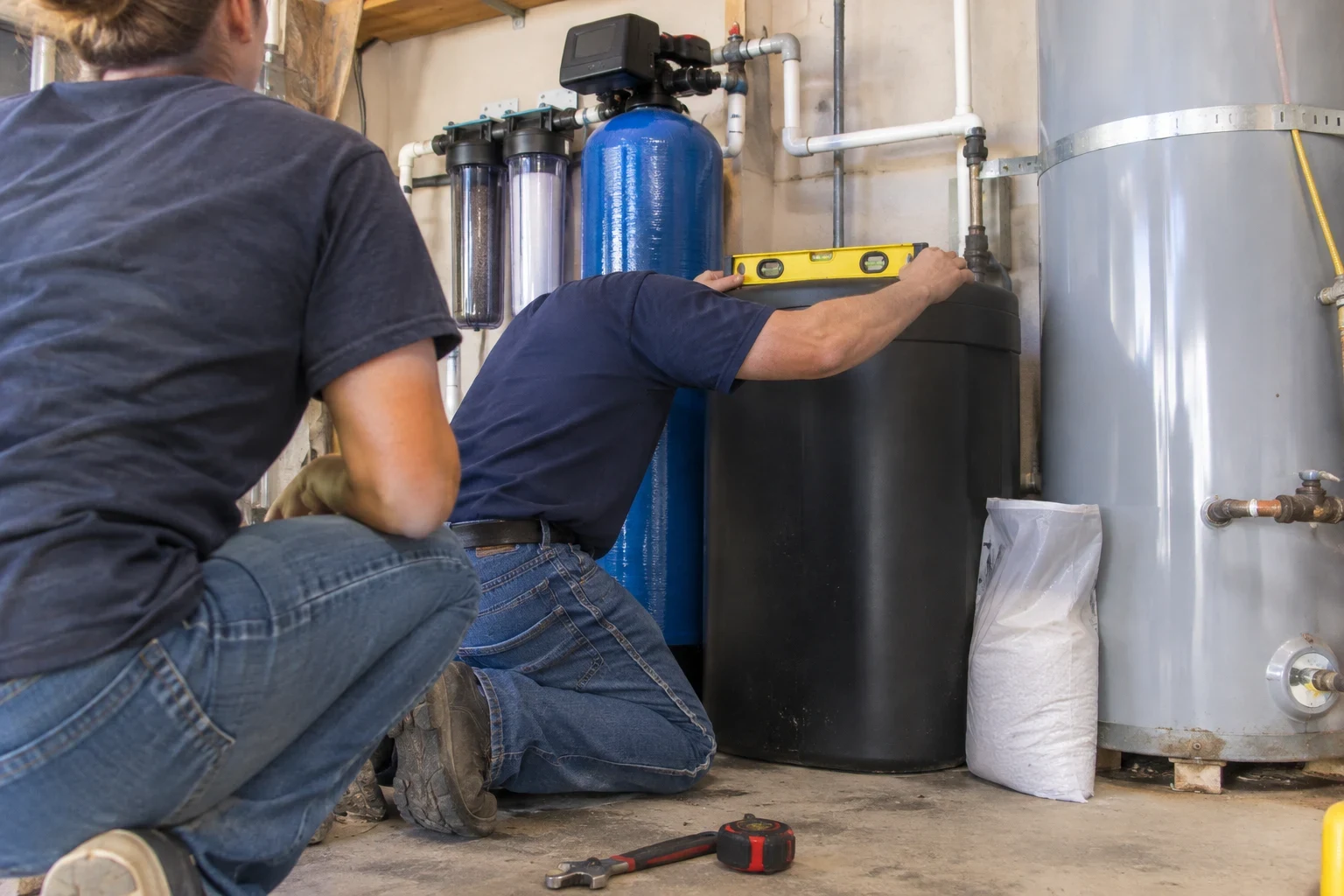
Most main lines enter through the garage, so that's usually where we look. We note any softener loop, the room for a tank and whether a drain is handy. You then get a written estimate with every part spelled out.
- 3
Install day
We turn off the water, plumb the system into the main line, fit the bypass and inspect each joint for drips. Your water is off for only a portion of the visit, and we let you know before it happens.
- 4
Flush, check pressure, tidy up
We rinse the new media until it runs clear, open several taps to make sure pressure holds and haul off packaging and old fittings. Before we go, you'll know what upkeep is coming and about when.
What affects the cost of whole-home filtration
No two homes use water the same way, so there is no single price for a whole-home filter. After we see your plumbing, you get a written estimate that lists each part and the labor. Nothing gets installed until you've read it and agreed. Here is what raises or lowers the total.
- How much water your home moves
- More bathrooms and more people mean more water flowing at once. Keeping pressure steady under that load takes a larger tank holding more carbon.
- Which media goes in the tank
- Catalytic carbon, used when the supply is treated with chloramine, is priced higher than standard carbon. Each added sediment stage also adds to the cost.
- Where the main line is and how easy it is to reach
- A ready-made softener loop with a drain close by makes for a short install. Moving the main line or working in a cramped spot needs extra fittings and more hours.
- Doing it alongside a softener
- When a filter and a softener go in on the same visit, much of the plumbing is shared. That usually works out better than booking two separate installs.
Whole-home filtration questions
- Is a whole-home filter the same thing as a water softener?
- They do different jobs. The carbon in a filter holds on to chlorine and many of the compounds that cause odd tastes and smells, while the calcium and magnesium behind scale pass right through it. Crusty faucets and spotty glass need a softener. Plenty of homes run both, with the filter installed ahead of the softener.
- If I have a whole-home filter, do I also need reverse osmosis?
- Not always. The whole-home filter improves the water at every tap and shower. A reverse osmosis system under the kitchen sink adds a finer step for drinking and cooking water, removing dissolved solids that carbon can't catch. We'll give you a straight answer on whether that extra step makes sense for your household.
- Will my water pressure drop?
- With a properly sized system, you shouldn't notice any change. When pressure does fall off, the usual cause is a tank that's too small for the house or a sediment cartridge that's packed with grit. We match the tank to your fixtures and show you how to look after the prefilter so pressure holds steady.
- How much upkeep does the system need?
- The sediment cartridge is changed most often, since it catches debris first. The carbon in the main tank lasts much longer, and how long depends on how much water your home uses. On install day we give you a rough timeline for both.
- Can it handle chloramine, or only chlorine?
- Chloramine is tougher to remove than chlorine, and standard carbon works on it slowly. Catalytic carbon is made for that job. Your water utility's annual quality report says which disinfectant it uses, and we're glad to read through it with you.
Find out which filter fits your home
Tell us what you're noticing in your water and we'll explain your options in plain English. You'll know what a filter can and can't do before you decide anything.