ServicesWater Softener Installation
Water Softener Installation in Gold Canyon
If your faucets wear a chalky ring, your glassware comes out cloudy and your water heater is collecting mineral deposits, hard water is the likely cause. We install a softener sized to your home, set it up properly and explain how each piece works.
What a water softener does, in plain terms
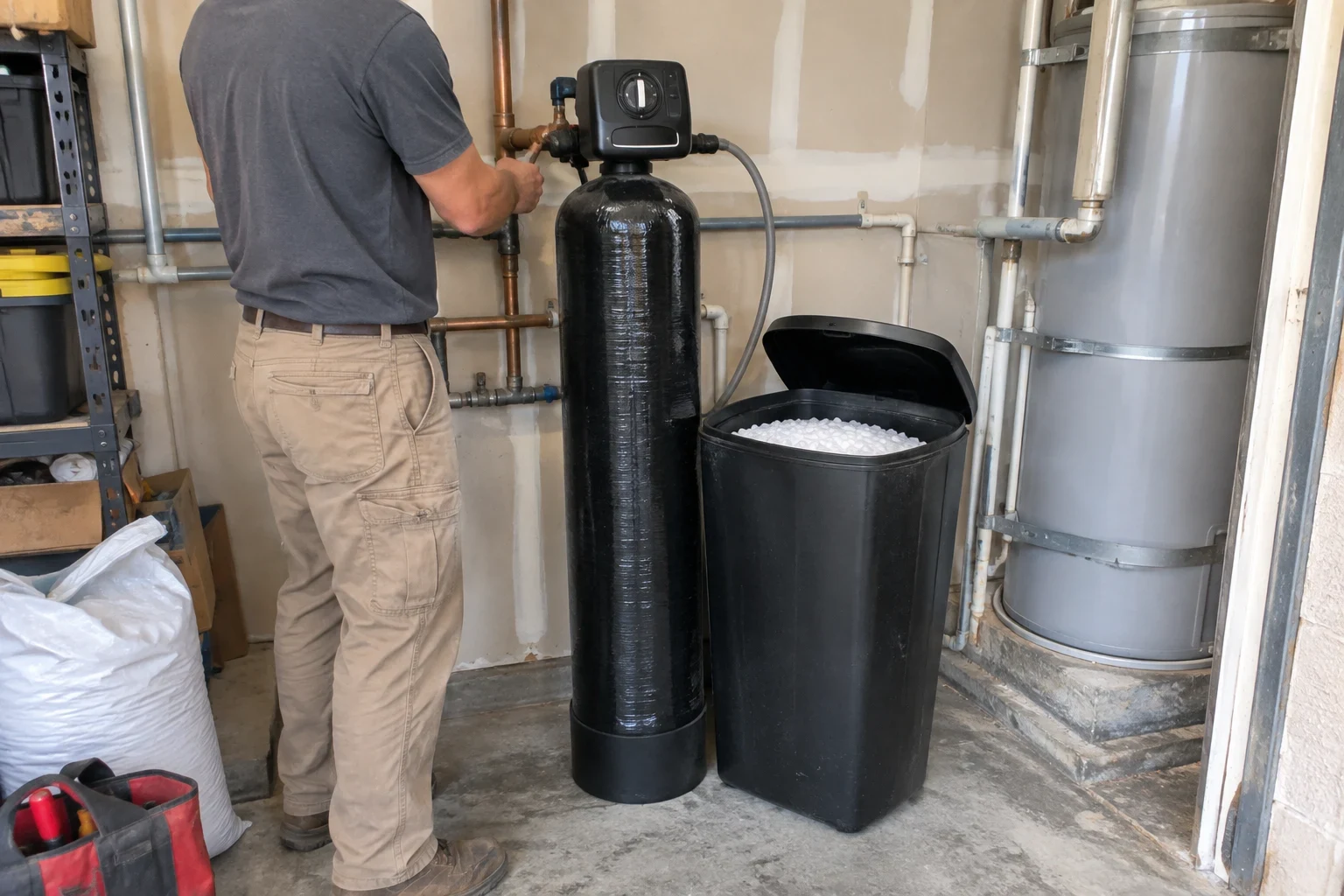
Hard water means your water carries a good amount of dissolved calcium and magnesium. When that water is heated in a water heater or dries on a faucet, the minerals stay put and harden into scale. A softener sends your water through a tank packed with resin beads that hold onto calcium and magnesium and swap them out, so far less residue reaches your shower, sinks and appliances.
Sooner or later the beads fill up and need a refresh. The softener rinses them with salty water drawn from the brine tank, which is why it uses salt and why that tank needs topping off every so often. East Valley water tends to run hard, so many homes here came with a softener loop already plumbed in the garage.
We pick a unit that fits how much water your household uses, connect it cleanly and program it to regenerate only when the resin is actually spent. You get softer water without wasting salt or rinse water on cycles you didn't need.
What your installation includes
- 01
Sizing for your household
Before we suggest a unit, we talk through who uses water in your home, the number of bathrooms and the hardness level your water provider reports. Those details tell us the capacity you need, so the softener keeps up without being bigger, and pricier, than it should be.
- 02
Connection at the softener loop
Many newer homes have a softener loop near the main water line, often in the garage. If yours does, that's where we tie in. If it doesn't, we explain what plumbing the job will need before any work begins.
- 03
Bypass valve and drain line
A bypass valve lets you take the softener out of service while the rest of the house keeps running water. We also route and secure the drain line so rinse water from each regeneration goes where it belongs.
- 04
Removing the old unit
Swapping out a tired softener? We disconnect the old one and haul it away, so it isn't left sitting in your garage.
- 05
Programming and a walkthrough
We set the control valve for your hardness and household size, run a first regeneration and check every fitting for drips. Before we head out, we show you the bypass, the salt level and the settings, and answer whatever questions you have.
Questions about Water Softener Installation?
Call(480) 745-2685Signs your home could use a softener
White crust on fixtures
Those chalky deposits around faucets and showerheads are mineral scale. You can scrub them off, but they're back within a week or so.
Spotty dishes and glass
When glasses and shower doors dry with a cloudy film, hard water is usually to blame rather than your dishwasher.
Soap that won't lather
Minerals in hard water keep soap and shampoo from foaming well. You end up using more, and your skin and hair may feel dry or coated.
Water heater noise or short life
A tank water heater that pops or rumbles usually has mineral sediment piled up inside. That layer forces the heater to work harder and can cut years off its life.
An old softener that stopped keeping up
If you already own a softener and the spots and crust have returned, the resin may be spent or the unit may be too small for the way your household uses water now.
How installation day goes
- 1
A phone conversation first
You describe the buildup or spotting you've noticed and tell us a little about your home. We lay out your choices and what each one would mean day to day, so installation day holds no surprises.
- 2
Arrival and a look at the plumbing
We look over the loop or main line, find the closest drain, and check for a power outlet in case the valve needs one. Before we start, we put down covers where we'll be working.
- 3
Install and leak check
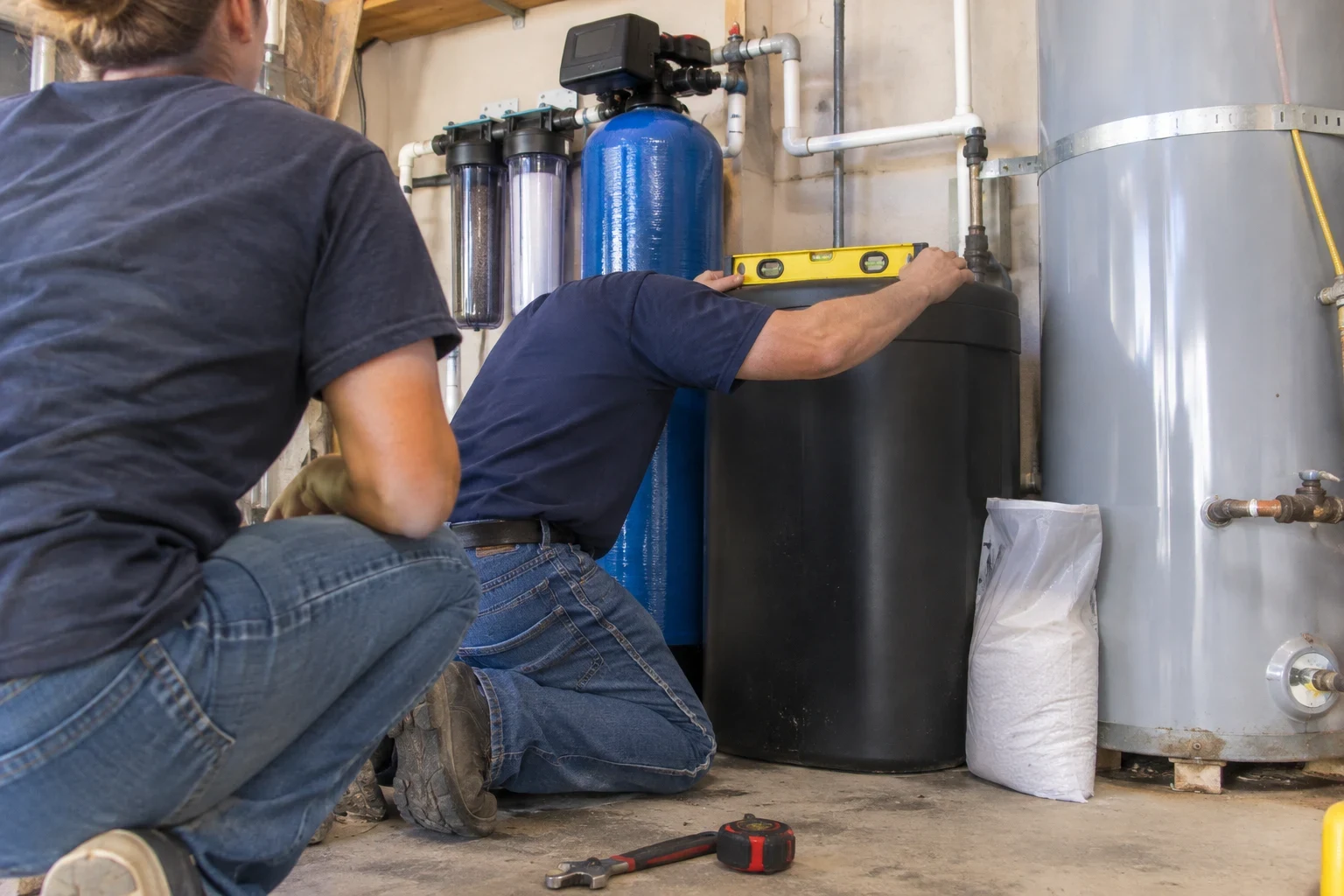
We position the tanks, hook up the bypass and drain, then bring the water pressure up gradually while we inspect each joint. At an existing loop, most installs are done in a few hours.
- 4
Setup, salt and cleanup
We fill the brine tank with salt, program the valve and start the first cycle. Then we tidy up the work area and go over what to keep an eye on in the weeks ahead.
What affects the cost
There is no single price for a softener because homes and households differ. These are the things that move the number. We go over each one with you by phone so you know what you're paying for and why.
- Capacity of the unit
- A larger household with more bathrooms needs more softening capacity. Bigger tanks and more resin cost more up front.
- Type of control valve
- A metered valve regenerates based on actual water use, which saves salt over time. A basic timer valve costs less but regenerates on a schedule whether you need it or not.
- Existing loop or new plumbing
- Connecting at an existing softener loop is simple. Homes without one need extra pipe and fittings, which adds time and material.
- Replacing an old system
- Removing and hauling away an old softener adds a little labor, and corroded fittings at the old connection sometimes need replacing.
Questions about softener installation
Will softened water taste salty?
No. The softener uses salt to recharge its resin, but very little sodium ends up in the water, and most people can't taste it. If you'd like drinking water with even less in it, a reverse osmosis system under the kitchen sink handles that.
How much salt will I go through?
It depends on your hardness, your household's water use and the valve type. A metered valve usually uses less salt than a timer. If you would rather not haul bags, our automated salt delivery keeps the brine tank stocked for you.
Is a softener the same as a filter?
Not quite. A softener removes the hardness minerals that cause scale. Whole-home filtration targets things like chlorine taste and odor. Some homes want one, some want both, and we'll explain the difference so you can decide.
Does my home need a softener loop?
It makes installation simpler, and many homes in the area already have one in the garage. If yours doesn't, we can still install a softener; it just takes some added plumbing at the main line.
How long does a softener last?
The tanks and valve can last many years with basic care. The resin wears down over time, and iron or chlorine can shorten its life. Keeping salt in the tank and the bypass closed during normal use helps it last.
Talk to us before you buy a softener
Describe what you're seeing around your home, from spotty glasses to a noisy water heater. We'll tell you which softener fits and walk you through what installation involves, step by step and without jargon.